

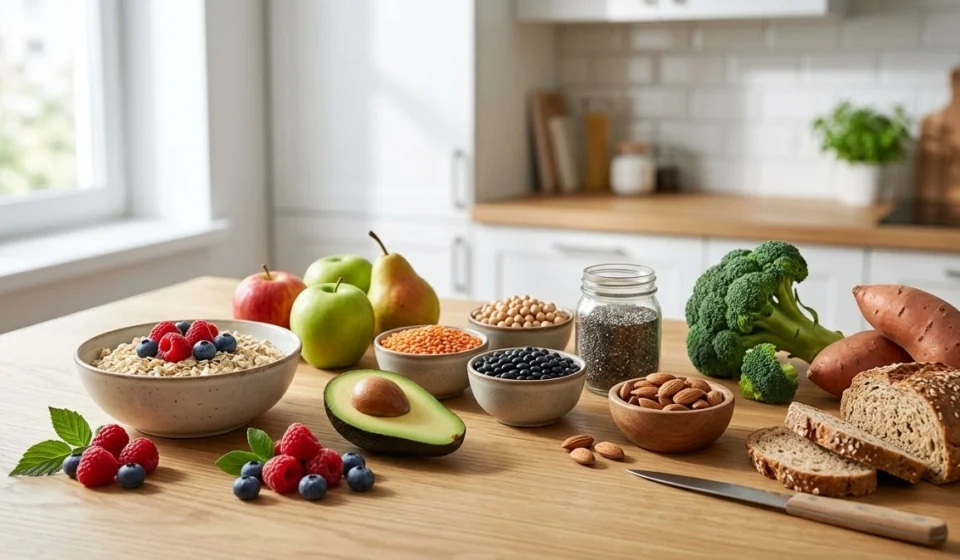
High Fiber Foods: 25 Easy Ways to Get More Fiber Every Day
You don’t have to revamp your entire diet to get enough fiber. Many everyday foods provide plenty of fiber, including beans, lentils, fruits, vegetables, whole grains, nuts, and seeds. Including these foods in your daily diet can help you reach your daily fiber needs and improve your overall diet.
Adults have different fiber needs depending on age and sex. The U.S. Food and Drug Administration, or FDA, lists 28 grams as the daily value for fiber on food labels, based on a daily diet of 2,000 calories. The FDA defines a high intake of a nutrient as when a serving contains at least 20 percent of the daily value. That’s about 5.6 grams of fiber per serving.
Another easy way to add fiber is to add it to your existing diet rather than relying on just one food. Below are 25 easy ways to increase your daily fiber intake.
What Are High Fiber Foods?
Fiber-rich foods are foods that contain significant amounts of dietary fiber. Most naturally occurring fiber comes from plant-based foods. They include fruits, vegetables, legumes and beans, whole grains, nuts and seeds.
Unlike other carbohydrates, the body does not completely digest fiber. It passes through the digestive system and can help maintain normal bowel function. Different types of fiber work differently in the body, so it is beneficial to eat a variety of fiber-rich foods.
When buying packaged foods, don’t just rely on words like “Whole Grain” or “Multigrain.” Look at the nutritional information label on the package. It clearly states the fiber content, which tells you how much fiber is actually in a serving.
25 Easy Ways to Get More Fiber Every Day
1. Start the day with oatmeal
Oatmeal is a simple breakfast that can provide plenty of fiber. You can increase the fiber content by adding berries, chia seeds, ground flaxseed, or chopped fruit.
2. Add berries to breakfast
You can add raspberries, blackberries, strawberries, and blueberries to oatmeal, yogurt, cereal, or smoothies. Whole berries can also be a convenient and convenient snack between meals.
3. Eat apples with the skin
Eating apples with their skins retains more natural fiber when you wash them thoroughly. Eating apples with nuts or plain yogurt can make a more filling snack.
4. Choose pears more often
Pears are also an easy fruit to get fiber from, especially when eaten with the peel. You can also add them to porridge, salads, or lunch.
5. Add avocado to meals
You can use avocado in sandwiches, salads, cereal bowls, and on whole-grain toast. It also contains healthy unsaturated fats along with fiber.
6. Stir chia seeds into foods
Chia seeds can be added to oatmeal, yogurt, overnight oats, or smoothies. They are small in size, so adding a tablespoon is an easy way to increase fiber without making meal preparation more difficult.
7. Use ground flaxseed
Ground flaxseed can be added to oatmeal, smoothies, cereals, and baked goods. It’s an easy way to add the fiber-rich seed to your daily diet.
8. Keep almonds or other nuts nearby
Almonds, peanuts, walnuts, and other nuts can provide fiber and make a good light snack during the day. Where possible, choose varieties that don’t contain a lot of salt or added sugar.
9. Make lentils a regular dinner ingredient
Pulses are a fiber-rich food and can be easily used in soups, curries, salads, and various grain dishes. Pulses go well with a variety of foods and cooking methods.
10. Add black beans to lunch or dinner
Black beans can be added to tacos, rice bowls, salads, soups, and rice dishes. When using canned beans, rinsing them can help reduce some of the extra salt on the surface.
11. Use chickpeas in salads and bowls
Chickpeas can be used in salads, soups, grain dishes, or roasted as a light snack. Hummus made from chickpeas is also an easy way to add fiber to your diet.
12. Try split peas in soup
Soup made from dried peas is an easy way to incorporate pulses into your diet. It can also be used with vegetables and fortified grains to make a more balanced meal.
13. Add edamame to meals
Edema mee can be served as a side dish or added to salads, rice bowls, and vegetable dishes. It provides plant-based protein along with fiber.
14. Put broccoli on the plate
Broccoli is a convenient vegetable for lunch or dinner. It can be served as a stir-fry, in pasta, grain dishes, soups, or as a standalone vegetable.
15. Eat more green peas
Green peas can be added to pasta, rice, soups, casseroles, or vegetable dishes. Frozen peas are especially convenient because they don’t take long to prepare.
16. Choose sweet potatoes
Sweet potatoes can be baked, roasted, or mashed and can be used in a variety of dishes. If appropriate, you can also get extra fiber by eating them with the peel.
17. Add vegetables to combination dishes
Don’t just eat veggies by themselves, add them into the meals you already make. Easily add more vegetables to pastas sauces, omelets, soups, wraps, sandwiches and rice dishes. Dietary guidelines also encourage increasing vegetable intake and using them in a variety of meals.
18. Substitute some of the white bread with whole-grain bread
Regular white bread may not have as much fiber as whole grain breads and loaves.However, not all products are created equal in terms of fiber, so be sure to check the nutrition label while shopping.
19. Switch to whole-wheat pasta
If you eat pasta regularly, replacing some of your regular pasta with whole wheat pasta is an easy way to increase your fiber intake. It can also be eaten with vegetables, legumes, or grains.
20. Try brown rice or another whole grain
Brown rice, barley, bulgur, quinoa, and other whole grains can be used in place of refined or refined grains in many dishes. Whole grains retain more of their grain structure, so they can provide more fiber.
21. Add barley to soups and stews
Adding barley to soups and stews can make meals feel more filling while also increasing fiber, which makes it an especially good combination with vegetables and legumes.
22. Choose air-popped popcorn as a snack
Plain popcorn is a whole grain food and can be a light, fiber-rich snack. Avoid adding too much butter, salt, or sweet toppings.
23. Spread hummus instead of a low-fiber topping
Hummus made from chickpeas can be used with sandwiches, wraps, crackers, and vegetable platters. It can also be used in place of spreads that are low in or no fiber.
24. Add beans or lentils to soups and salads
Adding lentils or beans to your regular meals is an easy way to increase fiber. Lentils and beans can make a light salad or soup more filling and add fiber.
25. Make one high-fiber swap at each meal
Small changes can often be more easily incorporated into a routine than large dietary changes. For example, replacing a low-fiber breakfast with oats, replacing white bread with whole grain bread, or replacing a highly processed snack with fruits and nuts.
Why Fiber Matters for Digestion
Fiber is especially known for its importance to the digestive system. Eating adequate amounts of fiber can help maintain regular bowel movements. The U.S. National Institute of Diabetes and Digestive and Kidney Diseases, or NIDDK, recommends gradually increasing fiber intake and drinking adequate fluids to help the body better adapt to the fiber.
Increasing fiber too much suddenly isn’t comfortable for everyone. Some people may experience gas, bloating, or abdominal discomfort. So increasing fiber gradually gives your digestive system time to adjust.
For this reason, it is not necessary to consume a lot of fiber on the first day. If a person initially consumes very little fiber, it may be more appropriate to start with one or two high-fiber foods and then gradually increase the amount.
High Fiber Foods for Regularity
Those looking for fiber-rich foods to help with bowel regularity can include whole grains, legumes, black beans, chickpeas, berries, apples with peel, pears, broccoli, green peas, carrots, and nuts. The NIDDK also lists many of these foods as good sources of fiber.
Fluid intake is also important. Because fiber works with water in the digestive system, increasing fiber and focusing on water and other appropriate fluids can make for a more comfortable experience.Fluid needs may vary from person to person depending on body composition, activity, health and environment.
Don’t blame your diet entirely for chronic constipation. It may also be due to medications, some medical conditions, change in daily routine and so on.If symptoms persist, it is advisable to consult a health professional.
What Foods Are High in Fiber?
If you want to know which foods contain fiber, you can start with a few major food categories.
- Pulses and beans: lentils, black beans, kidney beans, chickpeas, peas and soybeans.
- Fruits: Berries, pears, apples with peel, and oranges.
- Vegetables: Broccoli, green peas, carrots and other vegetables.
- Proven grains: oats, proven wheat bread, proven wheat pasta, barley and other proven grains.
- Nuts and seeds: Almonds, peanuts, chia seeds, flaxseeds, and other similar foods.
Including a variety of foods from all of these categories is a more practical approach than relying on any one so-called specialty diet. A varied diet also provides the body with different nutrients and different types of fiber.
How to Increase Fiber Without Feeling Overwhelmed
The easiest strategy to increase fiber is to make small changes that can be easily incorporated into your existing daily routine. Include fruit for breakfast, beans for lunch, vegetables for dinner, and have a light, fiber-rich snack available throughout the day.
Reading labels for packaged foods can also be helpful. According to the FDA’s nutrition label, a nutrient that contains 20 percent or more of the Daily Value is considered high, while 5 percent or less is considered low. Since the Daily Value for fiber is 28 grams, looking at the fiber line makes it easy to compare bread, cereal, crackers, pasta, and other packaged foods.
Also, remember that not all forms of fiber are necessarily healthy. A product may contain extra fiber, but it may also be high in sugar, sodium, or saturated fat. That’s why it’s better to look at the entire nutrition label rather than just the fiber content.
The Bottom Line
Fiber rich foods can be part of almost any dietary routine. Beans, pulses, fruits, vegetables, whole grains, nuts and seeds provide easy and practical ways to increase your daily fiber intake.
The most effective approach is to be consistent. Increase fiber gradually, eat a variety of plant foods, drink plenty of fluids, and include simple fiber foods in your daily diet. If a person has ongoing digestive problems or has a specific medical or dietary need, a health professional may be consulted to determine the appropriate approach.
FAQ Section
How much fiber should adults get each day?
The amount of fiber needed by adults varies depending on their age and sex. Generally, adults may need 22 to 34 grams of fiber a day, according to the NIDDK. The FDA sets the Daily Value for fiber at 28 grams, based on a 2,000-calorie diet.
What foods are high in fiber?
Pulses, beans, chickpeas, whole grains, berries, pears, apples with peel, vegetables, nuts, and seeds are all good sources of fiber. Including a variety of these foods throughout the day makes it easy to create a high-fiber diet.
Are high fiber foods good for regularity?
Fiber can help keep bowel movements regular and is often added in dietary approaches to treat constipation .Gradually increasing fiber and drinking plenty of fluids are best.
Does adding fiber cause bloating?
Yes. Some people who greatly increase their fiber intake too quickly may experience gas, bloating or other digestive problems. That’s why it’s more comfortable to increase fiber slowly.Some people, especially those who have IBS, may be more sensitive to quick increases in fiber.
Is fruit juice as fiber-rich as whole fruit?
Whole fruit is usually higher in fiber than juice because juicing removes much of the structure of the fruit. Eating whole apples, pears, berries, oranges, and other fruits is an easy way to maintain fiber in your diet.